Is Valencia Worth Visiting On A Tight Budget?
A research-backed answer to whether Valencia suits a tight budget: what is genuinely free, what costs EUR 2, and how the pay-what-you-want walking tours fit in.
Yes. Valencia is one of the better Spanish cities for a tight budget, because the core of a visit, the old town, the beaches, the Turia Gardens and the Albufera natural park, is free to walk, the major municipal monuments cost EUR 2 outside Sundays and holidays and nothing on those days, and the city's 36 free walking tours across GuruWalk and freetour.com are pay what you want. The paid items that catch visitors out are few and clearly priced, the cathedral cultural visit at EUR 12 being the biggest. A careful visitor can spend two or three full days in Valencia handing over almost nothing beyond food.
That answer deserves unpacking, because Valencia's affordability is uneven rather than uniform. The city runs several different admission regimes at once, and a visitor who assumes one rule covers everything can pay EUR 12 for a church that they expected to be free, or EUR 2 for a tower climb on a day when it costs nothing. This article walks through what genuinely costs nothing, what costs a little, and where the real traps are.
The single biggest budget lever is the free walking tour scene. The 36 free walking tours listed on this site across GuruWalk and freetour.com cover the old town, the City Of Arts And Sciences, El Cabanyal, the Silk Road history and more, and every one of them is pay what you want: you reserve a spot, walk, and tip the guide what the walk was worth to you. For a visitor watching every euro, they replace the need for a paid guided introduction to the city entirely.
How Much Does A Day In Valencia Actually Cost?
A day in Valencia can run from nearly nothing to around EUR 20 per person in admission fees depending on choices, because the free layer is large and the paid layer is cheap by big-city standards for a European destination of this size. Walking the old town, the Turia Gardens, the Malvarrosa beach and the City Of Arts And Sciences grounds costs EUR 0. The Lonja de la Seda and the two tower climbs cost EUR 2 each on a weekday, or nothing on a Sunday or public holiday. The cathedral cultural visit at EUR 12 is the one admission that stings, and it is entirely optional.
Food is the variable nobody can price for you, and this article will not invent a figure for it. What can be said is structural: the Mercado Central is free to enter and browse, and the municipal regime means a Sunday visit pairs a free Lonja with a free market wander, a combination that costs nothing at all on the admission side.
The honest way to think about a Valencia budget is in layers. The base layer is free and enormous. The second layer is the EUR 2 municipal monuments, which most budgets absorb without noticing. The third layer is the handful of genuinely priced attractions, the cathedral, the parish church visits, the big Ciutat de les Arts venues, and each of those is a deliberate choice rather than an unavoidable cost. A visitor who plans around the first two layers and picks at most one item from the third spends very little indeed.
What Is Free In Valencia Old Town?
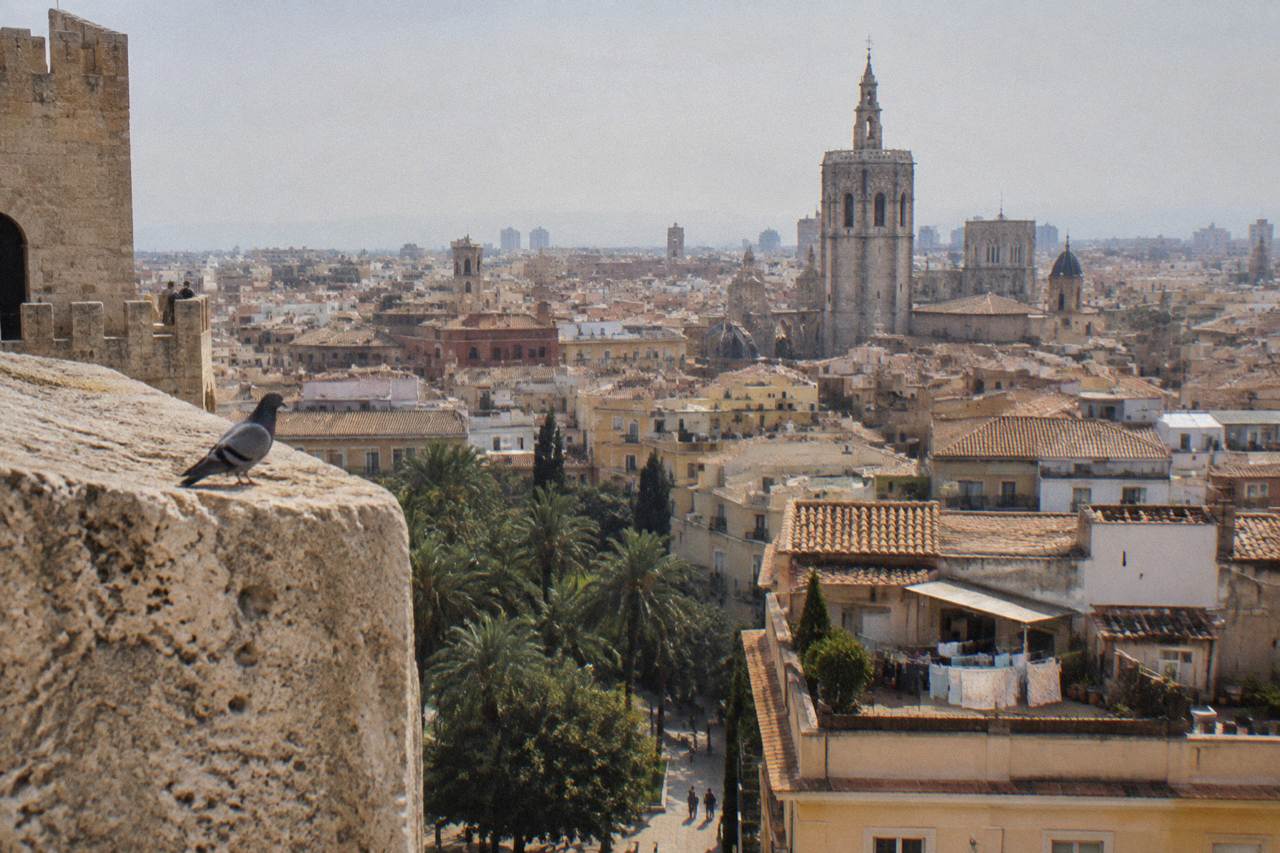
Most of Valencia old town is free, because it is streets, squares and church exteriors, and the walkable layer costs nothing: Plaza de la Virgen, the Plaza del Ayuntamiento, the El Carmen district's lanes and the Torres de Serranos and Torres de Quart gate exteriors are all open public space. The paid items inside the old town are specific and few: the tower climbs at EUR 2 outside Sundays and holidays, the Lonja at the same price, and the cathedral's cultural visit at EUR 12.
The towers deserve their own sentence because they are two facts, not one. The gates of Serranos and Quart are free to look at from the street at any hour. The climb to the top is a municipal ticket, EUR 2 general and EUR 1 reduced, free on Sundays and public holidays between 10:00 and 14:00, and it closes in rain, fog or strong wind and without daylight. A budget visitor who walks up to the Serranos gate, photographs it and moves on has spent nothing and missed little.
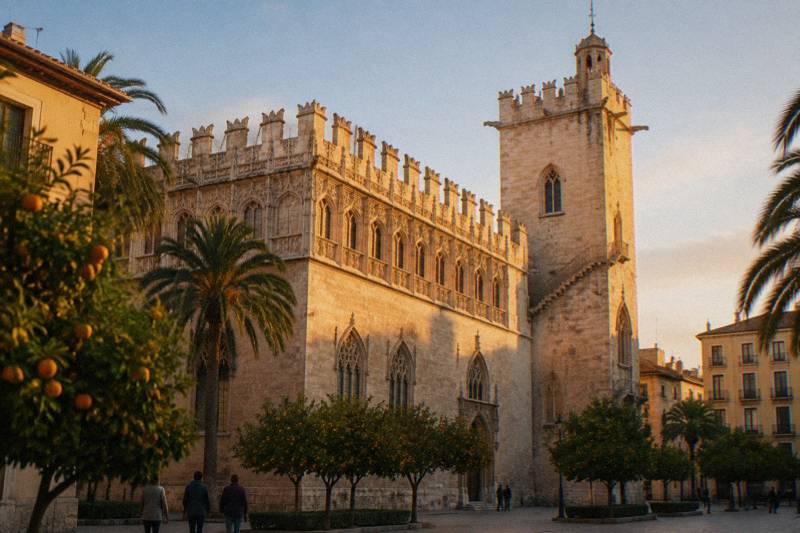
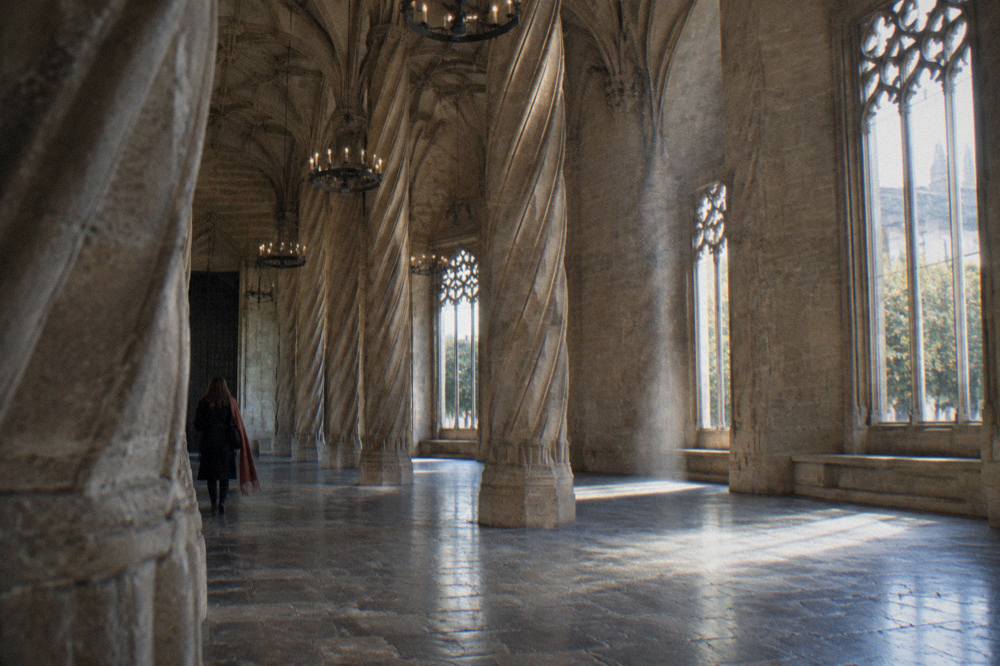
The Lonja de la Seda is the one old-town interior that a tight budget should still buy on a weekday, because EUR 2 for a UNESCO-listed gothic silk exchange is close to the best value in Spain. On Sundays and public holidays it is free. Its Pere Compte spiral stair opens only on special occasions, so the visit is about the hall itself. The Free Monumental Tour of Valencia, a freetour.com listing rated 9.4 out of 10 across 280 freetour.com reviews, meets right here at the Lonja and runs 1 hour 45 minutes in English and Spanish, which makes it a natural first move in the district: it costs nothing upfront and it orients you before you spend anything at all. You can also read the Free Monumental Tour page before deciding.
Because the walk meets at the Lonja rather than inside it, the ticket question stays separate: if you want the Lonja hall on a weekday, that is the EUR 2 municipal ticket, and on a Sunday or holiday the same building is free between 10:00 and 14:00. The walk itself never carries a price, on any day of the week.
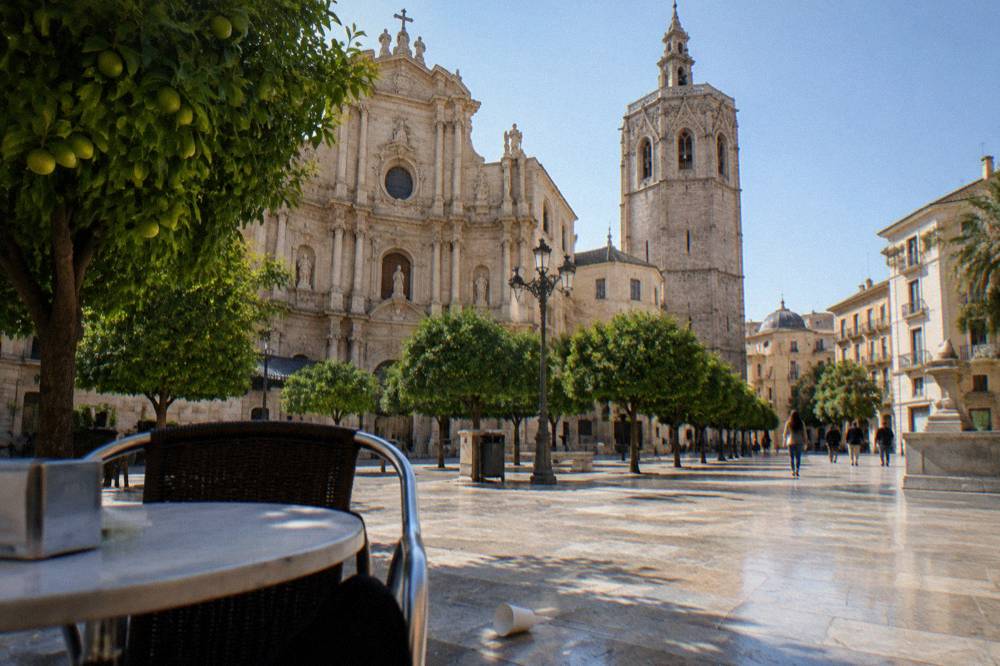
Between the Lonja and the cathedral sits the Plaça de la Mare de Déu, and that square is the meeting point of another strong free option. Free Tour Valencia Essentials, a GuruWalk listing rated 4.73 out of 5 across 5,030 GuruWalk reviews, runs 2 hours 30 minutes in English and Spanish from that square and is one of the most reviewed walks in the city. Like every walk on this site it is pay what you want, and for a visitor whose budget does not stretch to paid tours it is the standard recommendation for a first-day orientation. For a wider picture of the district at no cost, see the Valencia old town guide.
Which Valencia Museums Can You Visit Without Paying?
Two of Valencia's best museums are free every day, the Museu de Belles Arts and the Centre del Carme, both stated as free entry by Visit Valencia, the official tourism body, and a third, IVAM, is free all day Sunday and on Wednesday afternoons from 16:00 to 19:00, charging EUR 5 otherwise. The municipal museums, including the Museu Faller and L'Almoina, follow the Sunday and holiday rule instead: EUR 2 on an ordinary day, free on Sundays and public holidays.
The regimes matter because they do not merge. The Museu Nacional de Ceramica is a state museum, not a municipal one, so its rule is its own: EUR 3 otherwise, free from 16:00 on Saturday and all day Sunday. IVAM is regional and publishes its own terms on its own page, which is the source for the EUR 5 figure and the two free windows. A visitor who plans a Sunday around the municipal rule and assumes it covers everything will still pay at the parish churches, which run their own paid visits entirely outside the municipal scheme.
| Museum | Who runs it | Ordinary price | Free window |
|---|---|---|---|
| Museu de Belles Arts | Generalitat | Free entry | Free entry |
| Centre del Carme | Generalitat | Free entry | Free entry |
| IVAM | Generalitat | EUR 5 | All day Sunday, Wednesday 16:00 to 19:00 |
| Museu Nacional de Ceramica | State | EUR 3 | Saturday from 16:00, all day Sunday |
| Museu Faller | Municipal | EUR 2, EUR 1 reduced | Sundays and public holidays, 10:00 to 14:00 |
| L'Almoina | Municipal | EUR 2, EUR 1 reduced | Sundays and public holidays, 10:00 to 14:00 |
The two free-every-day museums are the budget headline. The Museu de Belles Arts holds the city's fine-art collection and costs nothing, per the official tourism body's listing, and the Centre del Carme is a contemporary art centre in a converted convent, likewise free entry. A rainy afternoon in Valencia can be spent entirely inside these two buildings for EUR 0, which is the subject of the what to do in Valencia when it rains piece. For the full Sunday picture, the which museums are free in Valencia breakdown carries the details.
Is The City Of Arts And Sciences Free?
The grounds of the Ciutat de les Arts i les Ciencies are free to walk, including the pools, the promenades and the Umbracle, while the venues inside, the Oceanografic, the Hemisferic, the Science Museum's exhibitions and the Palau de les Arts interiors, are paid. The Science Museum building can be entered freely, but its exhibitions cannot. No venue prices are printed here because the operators do not publish them on the pages verified for this site.
For a tight budget this split is genuinely good news, because the part of the complex most people photograph, the white architecture reflected in the water, is the free part. A walk from the old town through the Jardí del Turia to the complex is one of the best free afternoons Valencia offers, and it ends at a landmark that costs nothing to see. A GuruWalk listing, the Free Tour of the City of Arts and Sciences, rated 4.85 out of 5 across 92 GuruWalk reviews, meets at CaixaForum València and covers the area in 2 hours in English and Spanish, again pay what you want.
The trap is the assumption that the free grounds include the attractions. They do not, and the Hemisferic and the Science Museum sit in the same complex as the free walks, so the boundary is easy to cross without noticing. Decide in advance whether the venues are in the budget, and if they are not, the grounds, the Umbracle and the surrounding Turia riverbed still fill half a day.
What About The Beach And The Albufera?
The Malvarrosa beach is a public beach and free, and the Albufera natural park is free to enter, with only the boat rides on the lagoon paid, at EUR 4 to EUR 6 for a trip of about 40 minutes on the water. The park sits about 10 km from the city, and EMT lines 24 and 25 reach El Palmar and El Perellonet, free for holders of the 24, 48 and 72 hour Valencia Tourist Card, so even the journey out can cost nothing with the right ticket.
This is the cheapest full-day excursion available from Valencia. The bus fare out and back is the only unavoidable cost, and the landscape at the other end, a freshwater lagoon, rice fields and pine woodland, is a protected natural park with no entrance charge. Whether the boat price is per person or per boat is not stated on the verified pages, so treat EUR 4 to EUR 6 as a range to check on the spot rather than a promise.
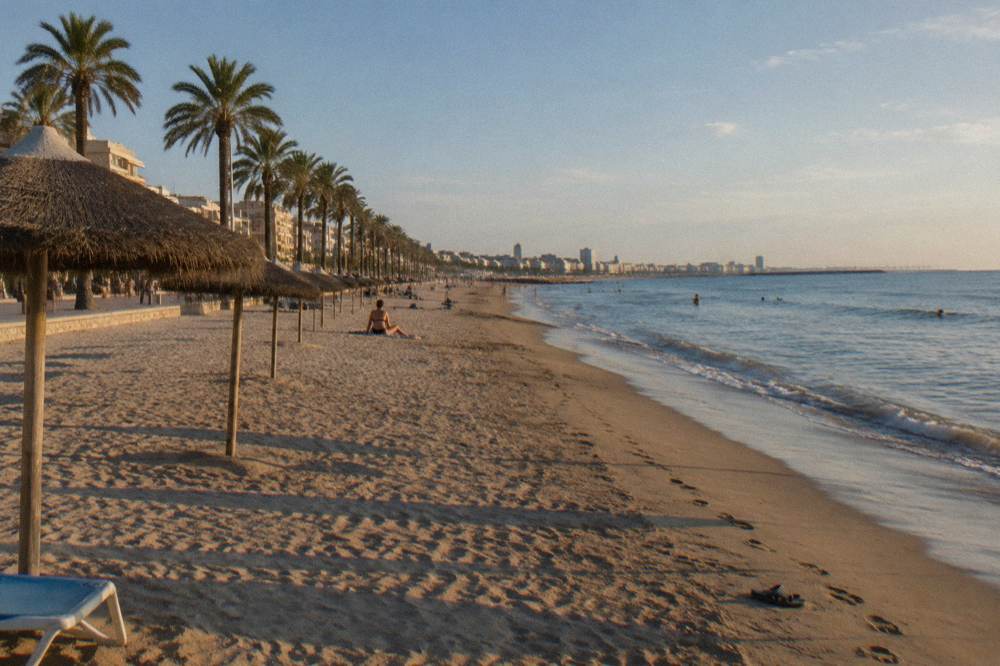
The beach needs less planning. The Malvarrosa is inside the municipal boundary and reachable by city bus, and the sand, the promenade and the water cost nothing. Patacona beach, just north, lies in Alboraya, outside the city, but the boundary is invisible on foot. For a budget traveller the beach is the city's free second act: old town in the morning, sand in the afternoon, no tickets at any point.
Do You Need The Valencia Tourist Card?
Most tight-budget visitors do not need the Valencia Tourist Card, because it is a paid product, from EUR 17, and the 24, 48 and 72 hour cards do not include the cathedral or IVAM, the two admissions a visitor is most likely to want. The card does cover the municipal monuments, which are EUR 2 each anyway, and EMT buses including lines 24 and 25 to the Albufera, so the arithmetic only works for a specific, dense itinerary.
The honest framing is that the card is a convenience, not a saving, unless your plan stacks several municipal sites on weekdays. On a Sunday or holiday the municipal sites are free without any card, which makes the card's core benefit evaporate on exactly the days a budget visitor should be using it. The cathedral's EUR 12 cultural visit and the Miguelete's separate EUR 3 ticket sit outside the card entirely, as does IVAM.
The 7-day card is a different product with different coverage, and the Holy Chalice chapel is reachable on the paid cathedral cultural visit or that 7-day card, never free. The budget verdict is simple: price your actual itinerary first, and if the card does not beat the sum of its parts, skip it. The Valencia Tourist Card guide carries the full coverage detail.
What Does A Tight-Budget Week Look Like?
A tight-budget week in Valencia can be built almost entirely from the free layer: pay-what-you-want walking tours, the free museums, the Sunday municipal free window, the beaches, the Turia Gardens and the Albufera park, with the only fixed admissions being the EUR 2 weekday monuments and, optionally, the cathedral at EUR 12. The pattern below is not a promise, it is the shape of a week that keeps spending optional.
| Day shape | What it costs |
|---|---|
| Old town walking tour plus Mercado Central and squares | Tour tip only, EUR 0 admission |
| Museu de Belles Arts and Centre del Carme | EUR 0 |
| Sunday or holiday: Lonja, towers, L'Almoina, Museu Faller | EUR 0, 10:00 to 14:00 |
| Turia Gardens walk to the City Of Arts And Sciences grounds | EUR 0 |
| Malvarrosa beach day | EUR 0 plus bus fare |
| Albufera park and lagoon | EUR 0 park, boats EUR 4 to EUR 6 |
The walks are the spine of this plan because they are the only guided experiences in the city that scale to any budget. This site, Free Things To Do In Valencia, lists 36 of them across GuruWalk and freetour.com, from the 3 hours 30 minutes Valencia in Full old-town walk rated 5 out of 5 across 20 GuruWalk reviews to the Silk Road walk rated 4 out of 5 across 72 GuruWalk reviews, which meets at Mercat Central and carries its own out-of-pocket cost, since monument and museum entries along that route are paid. The what is free in Valencia roundup and the Valencia on a budget guide expand the same layer.
The one thing a tight-budget visitor should not do is stretch the free-tour model into something it is not. The walks are free to reserve and pay what you want at the end, and the tip is the guide's income, so a fair tip is part of the honest version of this budget, not a loophole. The question of how much is a personal one, and the how much to tip on a free walking tour in Valencia piece addresses it without printing a figure, because no verified source states one.
Common Questions About Valencia On A Tight Budget
Is Valencia Worth Visiting On A Tight Budget?
Yes. The old town, the beaches, the Turia Gardens, the Albufera park and two free-every-day museums cost nothing, the municipal monuments cost EUR 2 on weekdays and nothing on Sundays and public holidays, and 36 pay-what-you-want walking tours across GuruWalk and freetour.com replace paid guiding entirely.
Is Valencia Cathedral Free To Enter?
The cathedral's cultural visit costs EUR 12, EUR 6 reduced, with an audioguide. The cathedral's own page lists free admission in set worship windows, and whether those windows allow sightseeing is not stated on the page. The Miguelete bell tower is a separate EUR 3 ticket.
Which Valencia Monuments Are Free On Sundays?
The Lonja de la Seda, the Torres de Serranos and Torres de Quart climbs, L'Almoina and the Museu Faller are free on Sundays and public holidays, 10:00 to 14:00 that day, and EUR 2, EUR 1 reduced, on other days. The rule never applies to the cathedral or the parish churches.
Are The Free Walking Tours Actually Free?
They are free to reserve and pay what you want at the end. You book a spot on the guide's GuruWalk or freetour.com page, walk, and tip what the walk was worth. No price is charged upfront on any of the 36 walks listed on this site.
Is The Albufera Free?
The natural park is free to enter and sits about 10 km from the city. Only the lagoon boat rides are paid, at EUR 4 to EUR 6, and EMT lines 24 and 25 reach El Palmar and El Perellonet.