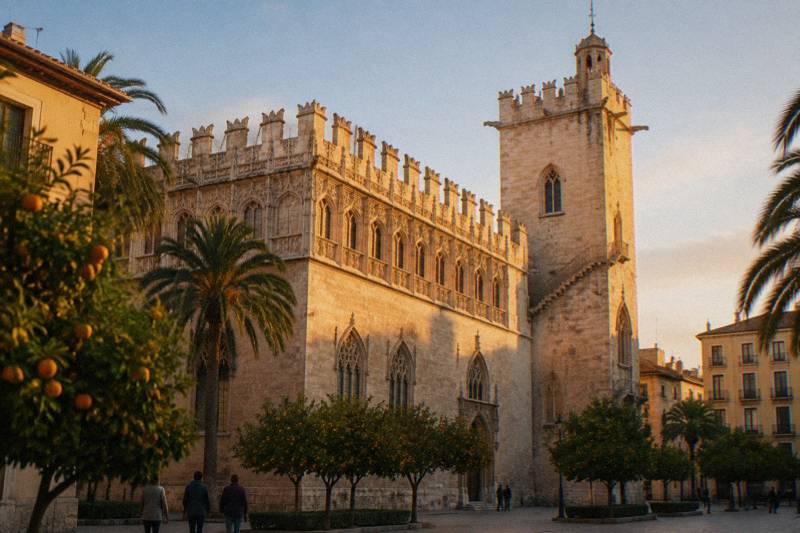
Is Valencia Expensive For Tourists?
A plain look at what Valencia actually costs tourists: which sights charge, which are free, and how free walking tours and the city's free layer keep the bill down.
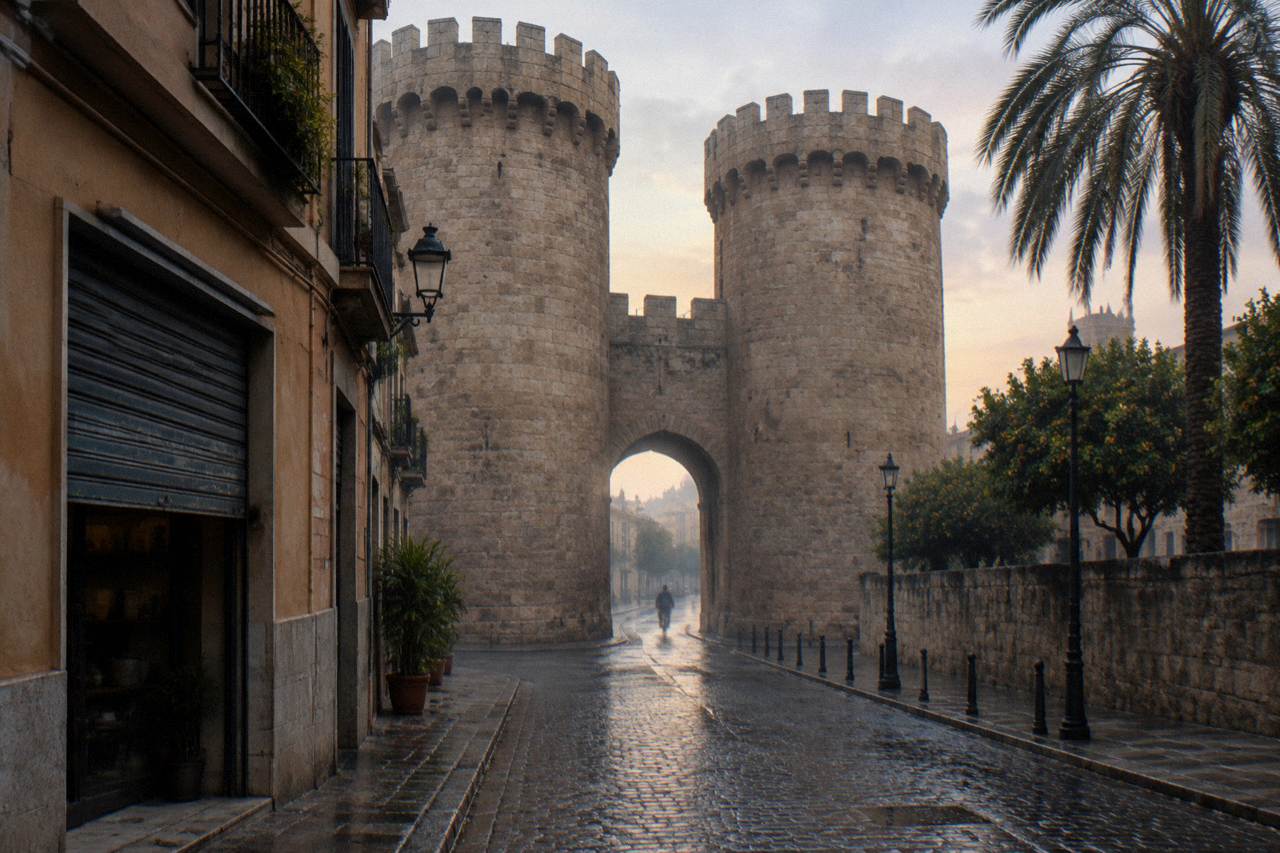
No, Valencia is not expensive for tourists who use its unusually large free layer. The old town, the Turia Gardens, the Malvarrosa beach, the Albufera park and the City Of Arts And Sciences grounds all cost nothing, and the paid sights are few and clearly priced, from EUR 2 municipal monuments to the EUR 12 cathedral cultural visit. The spend is a choice, not a floor.
The honest answer starts with a structural fact about the city rather than a feeling about it. Valencia's tourist offer splits cleanly in two. One half is a set of public spaces, gardens, beaches, markets and a riverbed turned park, that nobody charges for and nobody could. The other half is a short list of ticketed monuments and museums whose prices are printed, small and stable: EUR 2 for most municipal monuments, EUR 3 for a state ceramics museum, EUR 5 for the city's modern art museum outside its free windows, EUR 12 for the cathedral's cultural visit. There is no attraction in the city where the price is a mystery or where the sticker shock arrives later.
That split matters for how the question gets answered. A tourist who plans around the ticketed half will spend money every day and may still feel the city is cheap, because each individual ticket is small. A tourist who plans around the free half can spend close to nothing on sightseeing and still see the things Valencia is famous for: the Gothic heart of Ciutat Vella, the Serrans towers from the street, the market halls, the beach, the lake. The gap between those two trips is not luck or insider knowledge, it is a published set of rules, and most of them fit in one short table.
This article walks through the actual numbers, where they come from and where the traps are. There are real traps. Several monuments that get described as free in passing are free only on Sundays and public holidays. The cathedral is never free for sightseeing on its paid schedule. The bell tower beside it is a separate ticket the main one does not include. And the card sold to tourists covers less than many visitors assume. Each of those is stated plainly below, with the condition attached in the same sentence, because a conditionally free attraction is the whole risk in this question.
The free walking tours deserve their own place in the answer, because guiding is normally one of the biggest invisible costs in a city break. In Valencia it does not have to be. The walks below are real listings on GuruWalk and freetour.com, run by independent local guides, and every one of them is free with pay what you want at the end.
What Are The Real Prices At Valencia's Main Sights?
The headline prices are small and printed: the cathedral cultural visit is EUR 12 with a EUR 6 reduced rate and a EUR 22 Family Pack, the Miguelete tower is a separate EUR 3 ticket, municipal monuments such as the Lonja de la Seda and the Serranos and Quart climbs are EUR 2 with a EUR 1 reduced rate, and IVAM is EUR 5 outside its free windows. Nothing on this list reaches EUR 20.
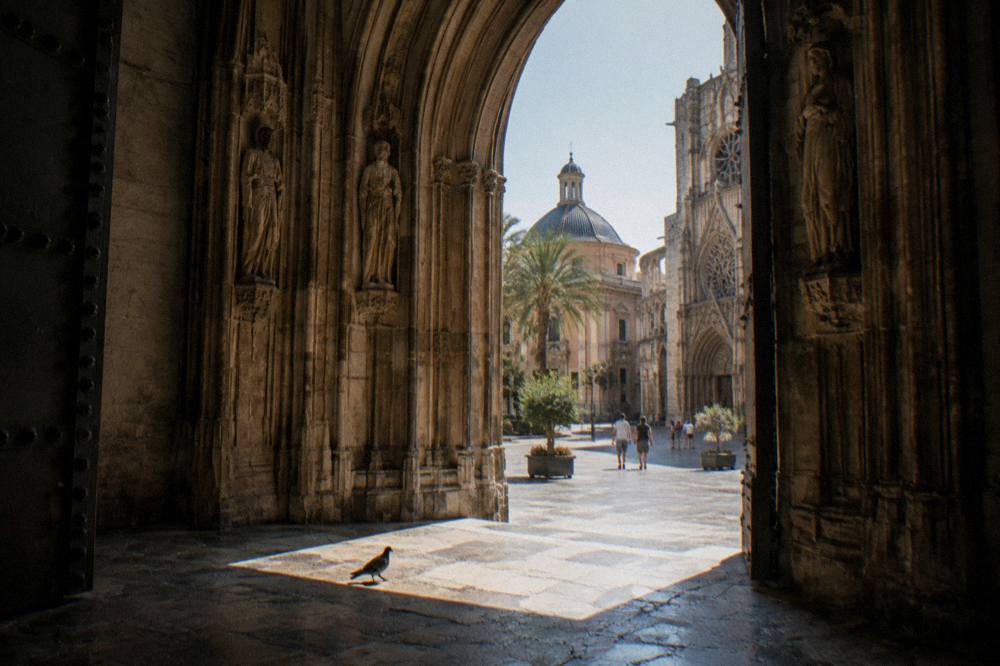
Start with the cathedral, because it is the one sight almost everyone visits and the one most often misdescribed. The cultural visit, which covers the cathedral and its museum with an audioguide, is EUR 12, EUR 6 reduced, with a Family Pack at EUR 22, per the cathedral's own admission page. The Miguelete, the Gothic bell tower built between 1381 and 1424, standing 50.85 metres with 207 steps, is a separate EUR 3 ticket that the cathedral ticket does not include and no tourist card covers. The Holy Chalice chapel sits inside the cathedral and is reached on that paid cultural visit, so it is never a free stop either.
The municipal monuments follow one shared rule, and it is worth learning once because it covers the Lonja de la Seda, the Serranos and Quart tower climbs, L'Almoina, the Museu de la Ciutat and the Museu Faller together. They are free on Sundays and public holidays, from 10:00 to 14:00 on those days. On every other day they cost EUR 2, EUR 1 reduced, and the Lonja and the two towers keep longer weekday hours, 10:00 to 19:00 Monday to Saturday. A holiday can fall on a weekday: 9 October 2026 is a Friday, and the municipal sites run the holiday rule that day. The Serranos and Quart climbs also close in rain, fog or strong wind and without daylight, which is a weather condition, not a price, but it changes the plan in the same way.
The rest of the ticketed list is short. The Museu Nacional de Ceramica, a state museum, is EUR 3, free from 16:00 on Saturdays and all day Sunday. IVAM, the modern art museum, is EUR 5 outside its free windows. The parish churches run their own paid visits, separate from every rule above: San Nicolas at EUR 16, Santos Juanes at EUR 15, San Juan del Hospital at EUR 8. And at Carrer de l'Hospital 7 there is a same-address trap worth knowing, the free Centre d'Artesania and the EUR 9 Silk Museum share one door number.
| Sight | Standard price | Free or reduced condition |
|---|---|---|
| Cathedral cultural visit | EUR 12 (EUR 6 reduced, Family Pack EUR 22) | Free admission only in worship windows; no cultural visit on 1 and 6 January, 19 March, Palm Sunday, Good Friday, 9 October, 8 December and 25 December |
| Miguelete bell tower | EUR 3 | Separate ticket, not covered by the cathedral ticket or the tourist card |
| Lonja de la Seda, Serranos and Quart climbs, L'Almoina, Museu Faller | EUR 2 (EUR 1 reduced) | Free Sundays and public holidays 10:00 to 14:00; free with the Valencia Tourist Card |
| IVAM | EUR 5 | Free all day Sunday and Wednesday 16:00 to 19:00 |
| Museu Nacional de Ceramica | EUR 3 | Free from 16:00 Saturday and all day Sunday |
| Albufera boat rides | EUR 4 to EUR 6 | The park itself is free; only the boats charge |
One figure on that table needs its condition spelled out. The cathedral's own page lists free admission in set worship windows and does not say whether that covers sightseeing, so the only honest wording is that one sentence of fact: free admission exists in those windows, and the paid cultural visit is the sightseeing route. Anything more definite than that is a guess dressed as a tip. The full breakdown of that one building is in the Valencia Cathedral guide, which keeps the worship windows and the ticket prices separate.
If the bill for all of the above still feels high for one trip, there is a way to cut the guiding part of it to zero while keeping a local's explanation of everything on the list. The free walks below meet at the Lonja de la Seda, at Plaça dels Furs and at the Serrans bridge, and each one is pay what you want. A reserved spot costs nothing up front, the guide sets no minimum, and the whole transaction happens at the end of the walk, in the amount the walker decides.
Which Museums And Monuments Are Free, And When?
Two art museums, the Museu de Belles Arts and the Centre del Carme, state free entry, and every municipal monument runs the same Sunday and holiday rule: free from 10:00 to 14:00 on Sundays and public holidays, EUR 2 otherwise. IVAM is free all day Sunday and on Wednesday afternoons, and the state ceramics museum is free from Saturday afternoon onward.
The free museum layer is real and bigger than most visitors expect, but it runs on three different administrative regimes that must not be blended. The municipal regime, set by the city council, covers the Lonja, the two tower climbs, L'Almoina, the Museu de la Ciutat and the Museu Faller, and its rule is the Sunday and holiday one described above. The regional regime, run by the Generalitat, gives each museum its own rule: the Museu de Belles Arts and the Centre del Carme state free entry, and IVAM is free all day Sunday and from 16:00 to 19:00 on Wednesdays, EUR 5 otherwise, per its own page. The state regime has one museum in the city, the Museu Nacional de Ceramica, EUR 3 with free entry from 16:00 on Saturday and all day Sunday.
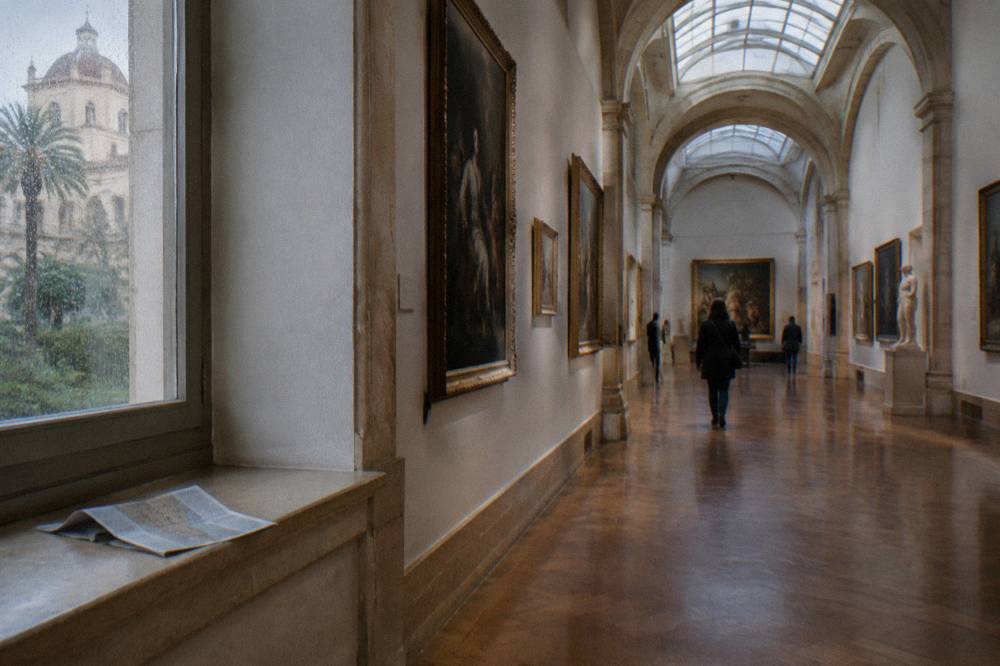
The Belles Arts claim deserves its own sentence because it is the best value in the city. The museum's own schedule and tariffs page states free entry, and the official tourism body lists it the same way, so a visitor can see one of Spain's major fine arts collections, including its large holdings of Goya and Sorolla, for nothing on any day of the week. The Centre del Carme, a contemporary art centre in a converted convent in El Carmen, states free entry too. Between those two and the Sunday and holiday rule, a culture-heavy itinerary can be built almost entirely from free doors.
Two private foundations add conditional free entry that is easy to miss. The CAHH is free on Wednesdays from 15:00 to 20:00, but only with a prior reservation, so the condition is not just a time window, it is a booking. Bombas Gens has one free exhibition, "Un destello de posibilidad", with registration, while its other shows are paid. Neither is a drop-in free museum, and treating them as such ends at a closed desk.
The Sunday rule has a practical shape worth planning around. Because the free window on Sundays and holidays runs 10:00 to 14:00, one well-ordered morning can take in the Lonja, a tower climb and L'Almoina in sequence, all inside Ciutat Vella, all on foot, all free. The tower climbs close in bad weather, so a rainy Sunday pushes the plan toward the indoor half of the list, the Lonja and the museums. The municipal rule, including the EUR 2 price and the holiday hours, is stated on the city council's own pages for the Torres de Serranos, which is where the condition can be checked before any Sunday plan is built on it.
The Lonja is also the meeting point of one of the free walks on this site, which turns a free Sunday morning into a free guided morning. The Free Monumental Tour of Valencia is a freetour.com listing, rated 9.4 out of 10 across 280 freetour.com reviews, running 1 hour 45 minutes in English and Spanish, and it meets at the Lonja de la Seda itself.
Where Does Valencia Cost Nothing At All?
A large part of Valencia costs nothing at any hour: the Turia Gardens, the Malvarrosa beach, the Albufera natural park, the Mercado Central as a place to browse, the grounds, pools and Umbracle of the City Of Arts And Sciences, and the CAHH foundation on Wednesday afternoons with a reservation. A visitor can fill whole days from this list alone.
The biggest free thing in Valencia is not a museum at all, it is the shape of the city. The Turia Gardens run along the former riverbed through the centre, a public park with no gate, no ticket and no closing price, and they connect the old town to the City Of Arts And Sciences on foot. The Malvarrosa beach is a public beach. The Albufera natural park, about 10 km from the city, is free to enter and walk; only the boat rides on the lake charge, and those are written only as EUR 4 to EUR 6, with no single figure stated. The park's Riu and visitor centres are Generalitat-run, and the EMT bus lines 24 and 25 reach El Palmar and El Perellonet.
The City Of Arts And Sciences needs its split stated plainly because it is the most commonly blurred item in the city. The grounds, the pools and the Umbracle are free to walk, and the Science Museum building can be entered freely, but its exhibitions cannot, and the Oceanografic, the Hemisferic and the Palau de les Arts interiors are all paid venues. No amounts are printed for those venues on this site, and none are needed for the cost question: the free half is a genuine attraction in its own right, one of the most photographed stretches of architecture in Spain, and it costs nothing.
Mercado Central is free to enter and browse, a public market where only what you buy costs money. The same goes for the Mercado de Colon as a building and a place to walk through. The old town itself, the Plaza de la Virgen, the Plaza del Ayuntamiento, the streets of El Carmen and the Ruzafa neighbourhood, is an open-air attraction with no admission anywhere, and the street layer of El Carmen carries enough painted facades and heritage detail to stand in for a paid attraction.
The events calendar extends the free layer further than any single building. Fallas is the clearest case: the monuments stand in the streets, the mascleta is a street event, the Cremà on the night of 19 March is a street event, and all of it is watched for nothing. Only entering the Special Section monument enclosures and the Ninot Exhibition is ticketed. The full annual pattern, with no invented dates, is laid out in the Las Fallas Valencia guide.
Do You Need The Valencia Tourist Card?
Most short-stay visitors do not. The Valencia Tourist Card is a paid product from EUR 17, it covers municipal monuments that are already EUR 2, and the 24, 48 and 72 hour versions do not include the cathedral or IVAM at all. It also covers EMT bus lines 24 and 25 to El Palmar and El Perellonet, which is its clearest practical use.
The card's economics depend on what it is being compared against. The municipal monuments it covers cost EUR 2 each on a paid day and nothing on a Sunday or holiday, so the sightseeing side of the card pays off only across several paid visits in a short window. The cathedral, at EUR 12, and IVAM, at EUR 5, sit outside the 24, 48 and 72 hour cards entirely, which removes the two most expensive single tickets from the arithmetic. The 7-day card does reach the cathedral, and it is the one version that touches the Holy Chalice chapel, but that is a longer-stay product than most tourists need.
Where the card earns its keep is transport and the Albufera trip. The 24, 48 and 72 hour cards include the EMT city buses, including lines 24 and 25 out to El Palmar and El Perellonet at the Albufera, which otherwise means paying bus fares each way. For a visitor planning the park, the boat ride at EUR 4 to EUR 6 and a day of bus travel, the card can make sense as a transport product with monuments attached rather than the reverse.
The honest framing for this article's question is that the card is optional, not required, and that its absence changes very little about the cost of Valencia. The free layer described above does not interact with the card at all: the gardens, the beach, the park, the market, the City Of Arts grounds and the free museum windows are free with or without it. A tourist who skips the card loses nothing on that list. The detailed breakdown, including what each card version covers, is in the Valencia Tourist Card guide.
Can Free Walking Tours Replace A Paid Guided Day?
Free walking tours cover the guiding cost better than anything else in the city, because the price is pay what you want and no euro figure attaches to any walk. The 36 free walking tours listed on this site across GuruWalk and freetour.com include English options that meet at the Lonja de la Seda, Plaça de la Mare de Déu, the Serrans towers and Plaça dels Furs.
Guiding is where city breaks quietly get expensive, and Valencia is one of the places where that cost can simply be declined. Every walk on this site is a real listing, 35 on GuruWalk and one on freetour.com, run by independent local guides, and every one is free to reserve with pay what you want at the end. No tip figure is printed anywhere on this site, because none exists as an official number: a visitor reserves a free spot and pays the guide what the walk was worth.
The English options give a real choice of angle on the same old town. The Valencia Old Town free walking tour in English with a local is a GuruWalk listing rated 4.99 out of 5 across 1,589 GuruWalk reviews, 2 hours 30 minutes, meeting at Plaça dels Furs. The Complete Express walk, also on GuruWalk, is rated 4.97 out of 5 across 860 GuruWalk reviews, 2 hours, meeting at the Pont de Serrans. The Free Tour Valencia Essentials walk, rated 4.73 out of 5 across 5,030 GuruWalk reviews, runs 2 hours 30 minutes in English and Spanish from Plaça de la Mare de Déu, the square behind the cathedral where the city's Roman, Visigothic and Moorish layers sit within a few steps of one another.
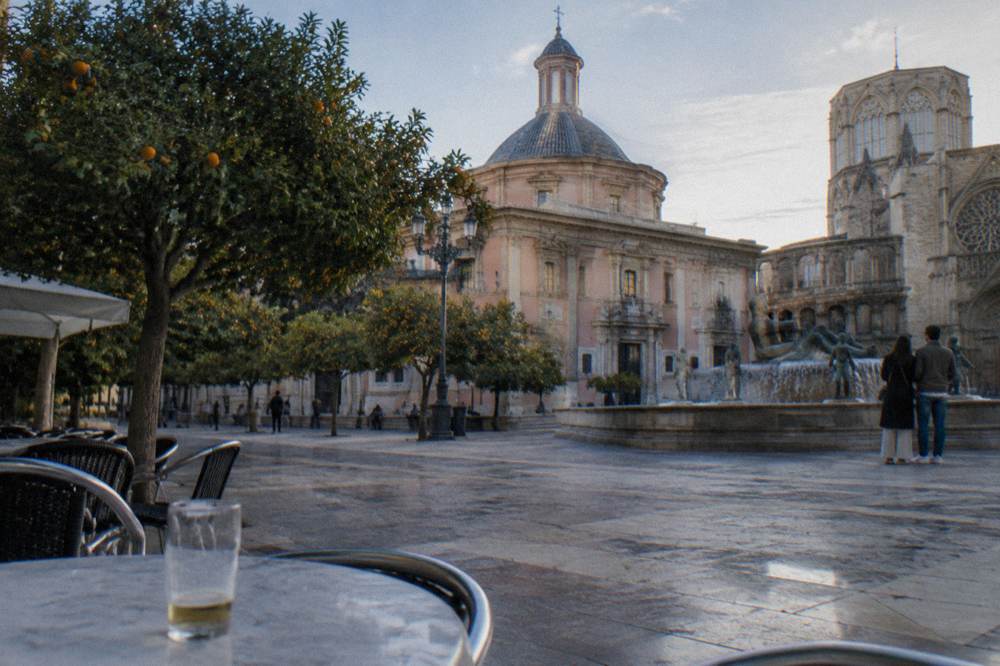
The essentials walk from Plaça de la Mare de Déu is the natural companion to a budget trip, because it starts at the geographic centre of everything the free layer offers. From that square the Turia Gardens, the Torres de Serranos, the Lonja and the Mercado Central are all a short walk away, and a guided 2 hours 30 minutes there costs nothing but the tip. For a visitor working out whether Valencia is expensive, that single walk reframes the whole question: the city's most historic ground, explained by a local, at a price the visitor sets.
The walks also reach beyond the old town for visitors whose budget has no room for paid excursions. The City Of Arts and Sciences free tour, a GuruWalk listing rated 4.85 out of 5 across 92 GuruWalk reviews, meets at CaixaForum Valencia and walks the free grounds of the complex. The El Cabanyal walk, rated 4.77 out of 5 across 58 GuruWalk reviews, meets on Carrer d'Eugènia Viñes by the beach. The Albufera park itself is free to enter, as covered above, and the walk-based alternatives to paid tours are laid out across the free walking tour Valencia guide.
Put together, the free layer and the free walks answer the original question on their own. Free Things To Do In Valencia is not a small list of consolation prizes, it is most of the city: the gardens, the beach, the park, the market, the grounds of the City Of Arts, the free museum windows and a roster of guided walks that cost whatever the walker decides. The paid half, the EUR 12 cathedral visit, the EUR 2 monuments, the EUR 5 IVAM ticket, is worth its prices and small enough to be chosen deliberately. A tourist who understands the split spends less in Valencia than in almost any comparable city break, not by scrimping but by knowing which half of the city they are standing in. That knowledge is free, and it is the single biggest saving on any Valencia itinerary.
Common Questions About Valencia Costs For Tourists
Is Valencia Expensive For Tourists?
No. The city's paid sights are few and small, EUR 2 municipal monuments, a EUR 12 cathedral cultural visit, EUR 5 at IVAM outside its free windows, and its free layer covers the gardens, the beach, the Albufera park, the market and the City Of Arts grounds. Free walking tours across GuruWalk and freetour.com remove the guiding cost entirely.
What Does The Valencia Cathedral Cost?
The cultural visit is EUR 12, EUR 6 reduced, with a EUR 22 Family Pack, and includes an audioguide. The Miguelete bell tower is a separate EUR 3 ticket that the cathedral ticket does not include. The cathedral's own page lists free admission in set worship windows and does not state whether those windows cover sightseeing.
Which Monuments Are Free On Sundays In Valencia?
The Lonja de la Seda, the Serranos and Quart climbs, L'Almoina, the Museu de la Ciutat and the Museu Faller are free on Sundays and public holidays from 10:00 to 14:00, and EUR 2, EUR 1 reduced, on other days. The rule applies on weekday holidays too, including 9 October 2026, a Friday.
Is The City Of Arts And Sciences Free?
The grounds, the pools and the Umbracle are free to walk, and the Science Museum building can be entered freely, but its exhibitions cannot. The Oceanografic, the Hemisferic and the Palau de les Arts interiors are paid venues. No venue prices are printed on this site.
Do You Have To Pay For The Free Walking Tours?
The walks are free to reserve and pay what you want at the end. All 36 walks listed on this site, 35 on GuruWalk and one on freetour.com, run on that model, and no tip amount is published anywhere because none exists as an official figure.
Is The Albufera Free To Visit?
The natural park is free to enter and walk. Only the lake boat rides charge, written as EUR 4 to EUR 6, and EMT bus lines 24 and 25 reach El Palmar and El Perellonet, covered by the 24, 48 and 72 hour tourist cards.