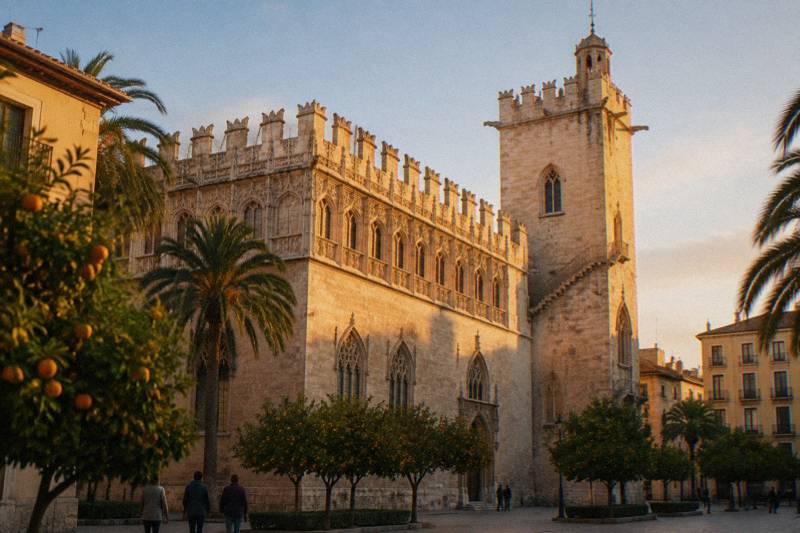
Las Fallas In Valencia: What Is Free To Watch
Las Fallas fills Valencia with monumental statues, daily firecracker salutes and a final night of flames, and most of it happens in the open street where watching costs nothing.
Short answer
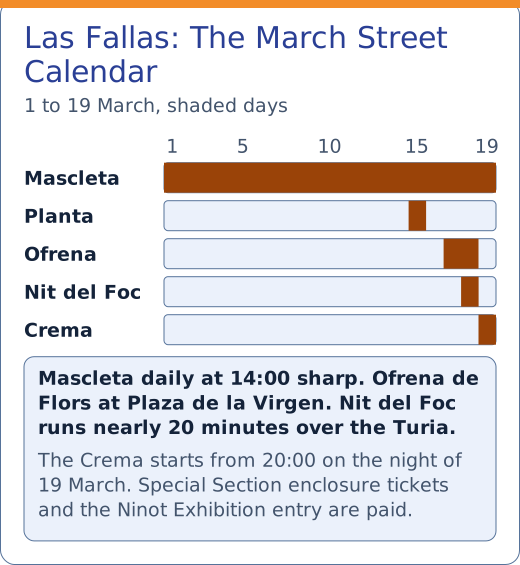
Most of Las Fallas is free to watch: the mascleta at 14:00 at Plaza del Ayuntamiento from 1 March, the street fallas monuments, the Ofrenda floral offering and the Cremà on the night of 19 March all happen in public space. Ticketed parts are limited to the Special Section monument enclosures from 16 to 19 March and the Ninot Exhibition, with no amounts published here.
Las Fallas turns Valencia into a city of giant satirical statues, midday gunpowder concerts and a final night when the whole thing burns. The fixed annual pattern runs 15 to 19 March, with the daily mascleta starting at 14:00 sharp at Plaza del Ayuntamiento from 1 March and the Cremà on the night of 19 March. The good news for anyone watching a budget: the great majority of it happens in the open street, and watching costs nothing. This guide separates the free spectacle from the small number of ticketed parts, and points to the free walking tours listed on this site that fit naturally into a Fallas trip.
What Is Las Fallas And When Does It Happen?
Las Fallas is Valencia's great spring festival, held every year from 15 to 19 March, in which neighbourhood commissions build satirical monuments called fallas, plant them in the streets and finally burn them on the night of 19 March. The build-up starts earlier, with the daily mascleta firing at 14:00 sharp at Plaza del Ayuntamiento from 1 March, and the whole city becomes the venue. The monuments themselves stand in squares and intersections across the city for the main days. The festival's centre of gravity is Ciutat Vella and the streets around Plaza del Ayuntamiento, but fallas monuments are planted in every district, from Ruzafa to El Cabanyal. The event is free in the street, and the street is where nearly everything happens.
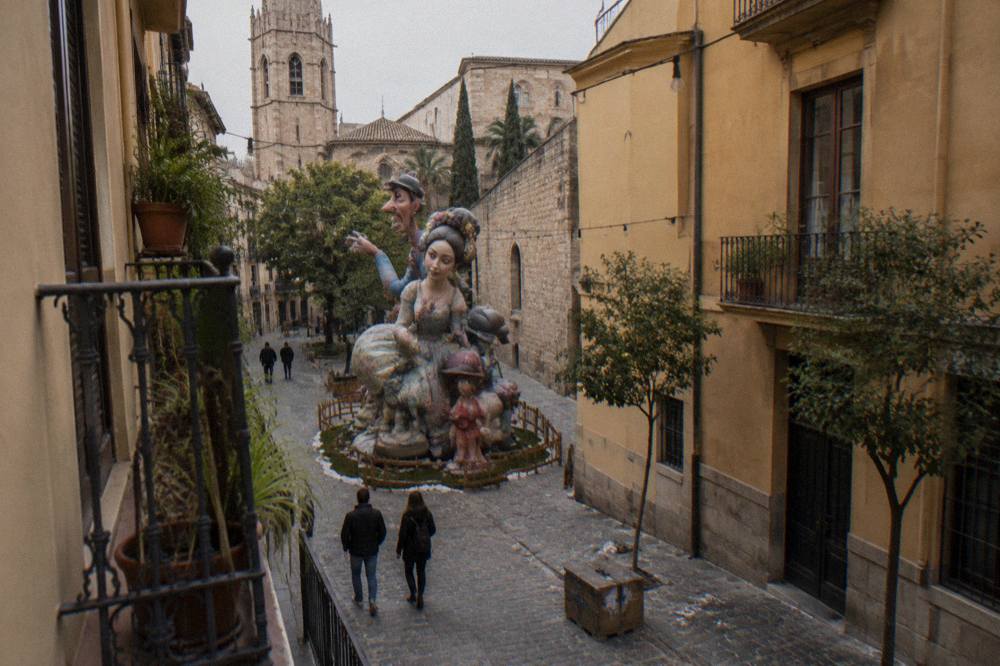
The word fallas names both the festival and the monuments themselves. Each one is a sculptural composition, often several storeys tall, built around a theme that is usually satirical, and each belongs to a specific commission with its own patch of street. During the main days you walk from one to another freely, because they stand on public ground with no barrier around them. The exceptions are the Special Section enclosures, which are ticketed from 16 to 19 March, and the Ninot Exhibition, which is also ticketed. No amounts are published for either on this site.
The Cremà ends it all. On the night of 19 March the monuments are set alight one after another across the city, with the last and largest burning late. There is no ticket to stand in a street and watch a falla burn, and this closing night is the single most watched free event of the festival. If you are planning the wider trip around it, the Valencia Old Town guide covers the streets where most of the central action happens.
Which Fallas Events Are Free To Watch?
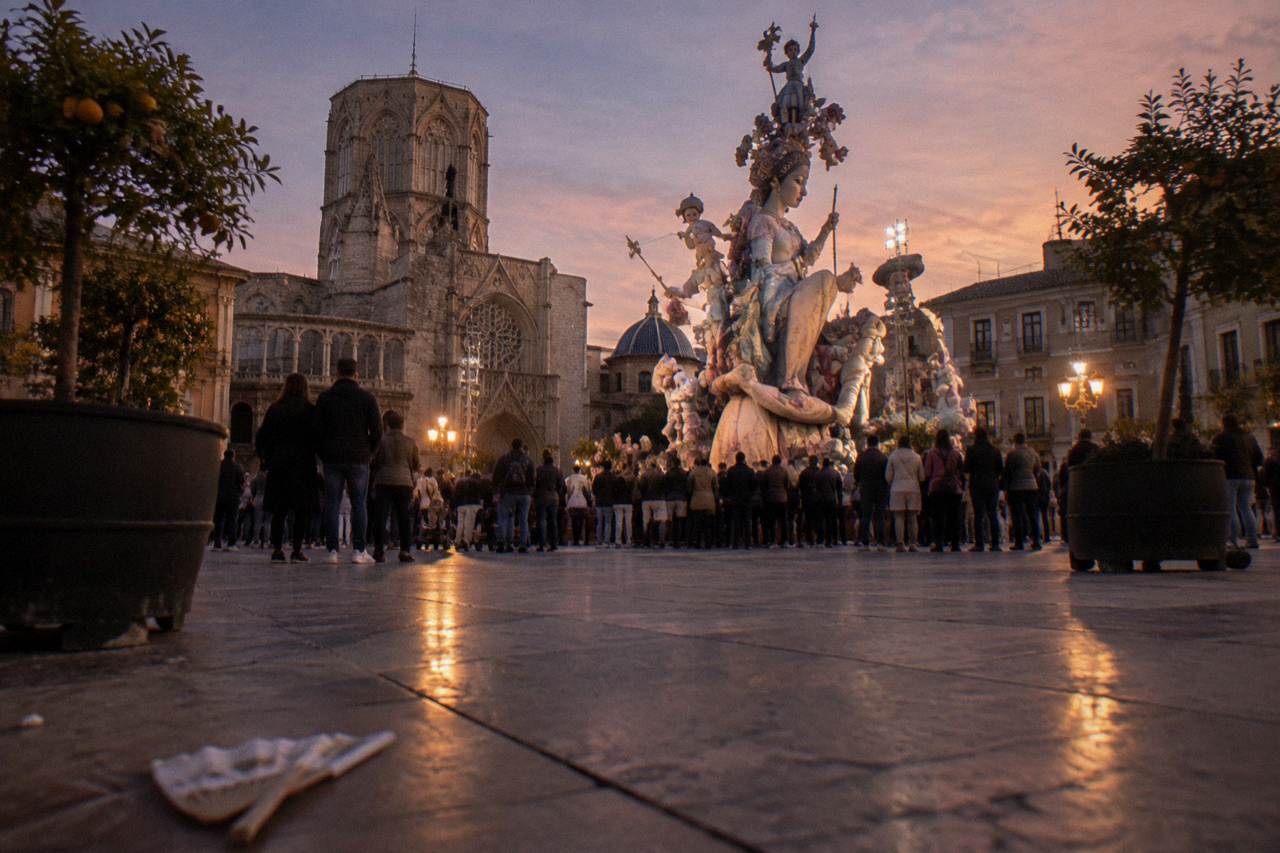
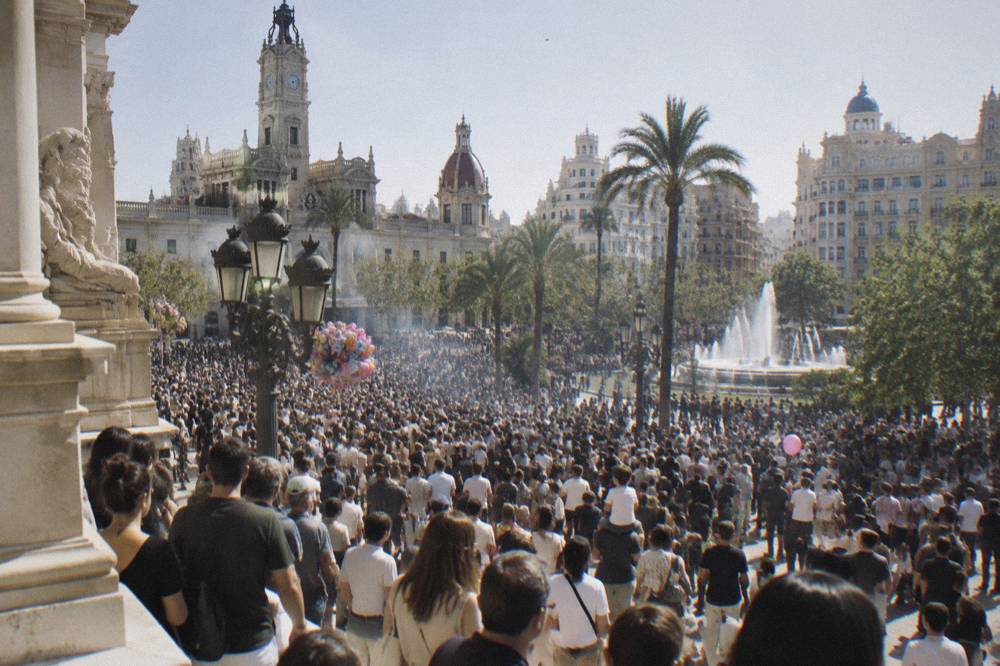
The free list is long: the daily mascleta at 14:00 at Plaza del Ayuntamiento from 1 March, the planted street fallas in every district, the Ofrenda floral offering to the Virgen, the street parades and the whole Cremà on the night of 19 March all cost nothing to watch. All of these take place in public space. The mascleta is an auditory event rather than a visual one, a rolling sequence of coordinated firecracker barrages that builds to a finale you feel in your chest, and the square fills well before 14:00. The fallas monuments are the visual heart of the festival, and walking among them is the classic free Fallas activity. The Ofrenda brings thousands of costumed participants in procession to Plaza de la Virgen over two days, and watching from the pavement is free.
The distinction that matters is between the street and the enclosure. A falla planted on a normal street corner has no fence and no fee. The Special Section, the top competitive category, places its monuments in enclosed areas where entry is ticketed from 16 to 19 March. That is the main paid element of the festival, and it is optional: the same monuments are visible from outside the barriers, and hundreds of other fallas across the city are entirely open. The Ninot Exhibition, where the smaller ninot figures are displayed before the festival, is likewise ticketed, with no amount stated here.
| Event | Where | Free To Watch? |
|---|---|---|
| Mascleta from 1 March | Plaza del Ayuntamiento, 14:00 sharp | Yes, from public space |
| Street fallas monuments | Every district, 15 to 19 March | Yes, in the street |
| Special Section enclosures | Central Fallas locations, 16 to 19 March | No, ticketed entry |
| Ninot Exhibition | Indoor exhibition venue | No, ticketed entry |
| Ofrenda floral offering | Procession to Plaza de la Virgen | Yes, from the street |
| Cremà | Citywide, night of 19 March | Yes, from public space |
A free walking tour is a good way to anchor the festival geography, and this site lists 36 free walking tours across GuruWalk and freetour.com. Three of them stand out for Fallas week:
Each of those walks is free, pay what you want, and each is run by an independent local guide. They do not enter the monuments, and meeting at a monument is not entering it, but they put you on streets you will want to return to once the monuments are planted.
Where Are The Best Free Spots For The Mascleta?
The mascleta fires at 14:00 sharp at Plaza del Ayuntamiento, and the free spots are anywhere in or around that square, with the closest experience in the plaza itself and a calmer one on the surrounding streets where the sound still carries. The event is about sound and vibration rather than visuals, so you do not need a direct line of sight to the firing position to get the full effect. The square fills up through the late morning. There is no ticket and no reserved public area, so the practical advice is simply to arrive with time to spare and pick your spot before the crowds close in.
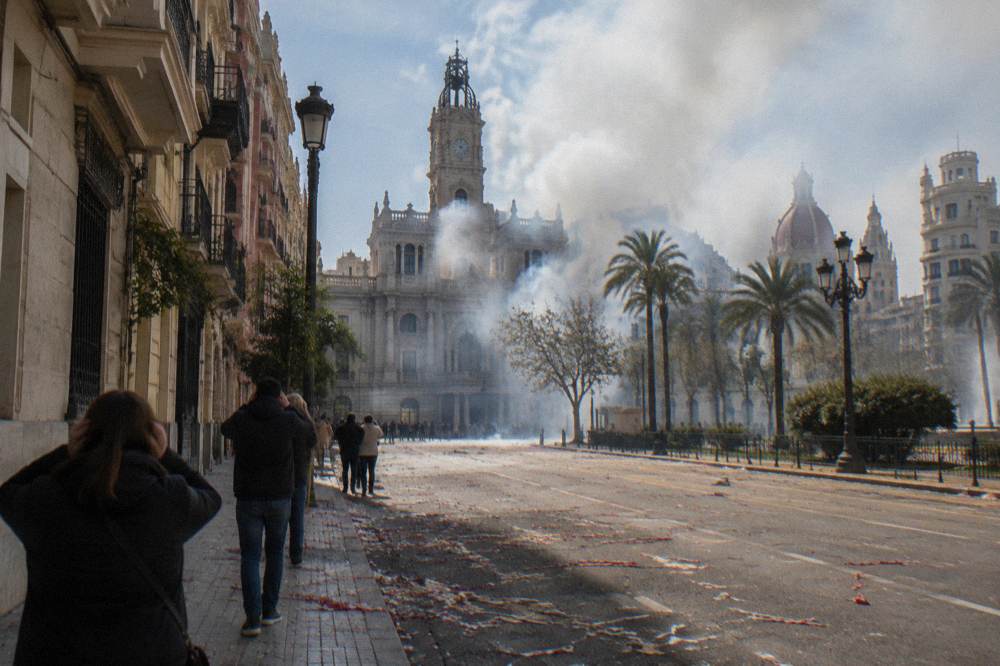
The wider plaza cluster around Plaza de la Mare de Déu and the streets running toward the Lonja de la Seda gives you the fallas geography in one walk. The Free Monumental Tour of Valencia, a freetour.com listing run by guide Paraguas Rojos, meets at the Lonja de la Seda itself, runs 1 hour 45 minutes in English and Spanish, and is rated 9.4 out of 10 across 280 freetour.com reviews. The Lonja is a municipal monument, free on Sundays and public holidays from 10:00 to 14:00, and EUR 2 otherwise, so a Fallas trip that lands on the right day can fold a free monument visit into the same corner of the old city. The municipal rule and its EUR 2 price belong in the same breath as the word free here, and the La Lonja De La Seda guide covers it in full.
If you prefer a GuruWalk listing in the same area, Free Tour Valencia Essentials meets at Plaça de la Mare de Déu, runs 2 hours 30 minutes in English and Spanish, and is rated 4.73 out of 5 across 5,030 GuruWalk reviews. It covers the same central stage where the mascleta fires and the Ofrenda arrives. The Torres De Serranos guide covers another landmark on that walking route, where the gate is free to look at from the street and the climb is a separate paid ticket, free only under the Sunday and holiday rule.
One planning note worth folding in: the 9 October 2026 holiday, a Friday, runs the same municipal Sunday and holiday free-entry rule, with civic events at Plaza del Ayuntamiento from 12:00 and a mascleta at about 14:00. Anyone rehearsing their Fallas mascleta technique in autumn gets a full-scale rehearsal on that day, and municipal sites run holiday hours from 10:00 to 14:00.
What Does The Cremà Cost To Watch?
The Cremà on the night of 19 March costs nothing to watch from public space, because the fallas burn in the streets and squares where they were planted, and no public viewing area is ticketed. It is the closing act of the festival and the reason many visitors time their whole trip around it, and the whole spectacle unfolds in the open. The burns are staggered through the evening, with the children's fallas burned earlier and the large monuments later, ending with the final burn of the night. Firefighters manage each site, crowds stand behind cordons, and the spectacle is entirely free. There is no seat to buy and no public enclosure to enter.
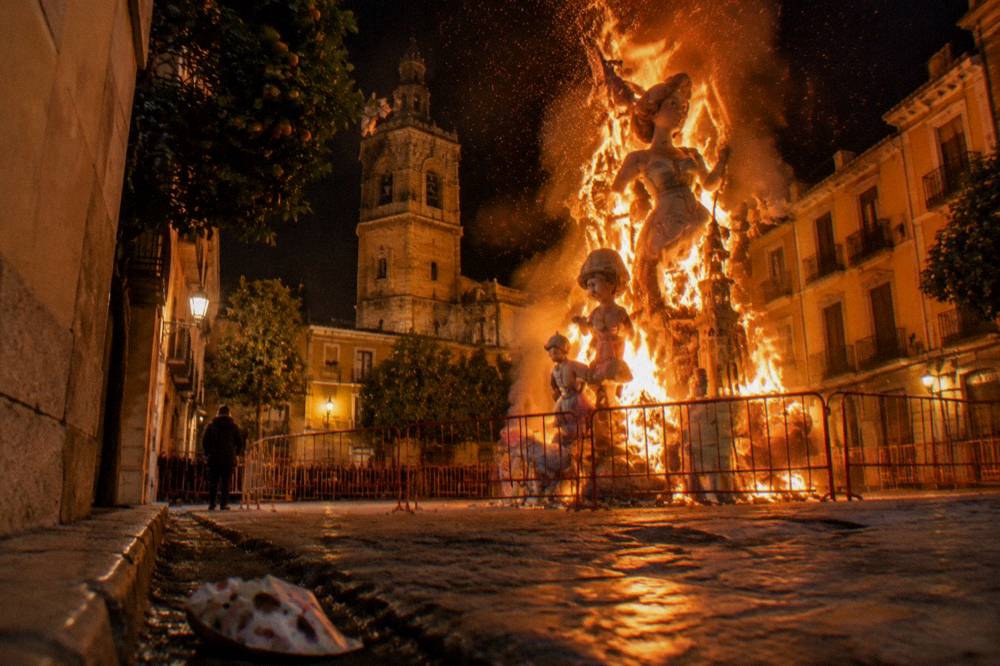
The one nuance is the same one that runs through the whole festival. The Special Section monuments burn inside their ticketed enclosures on that night too, so watching those specific burns from inside the barrier requires the ticket. Watching them from outside the barrier, or watching any of the hundreds of non-Special fallas burn in open streets, costs nothing. The Cremà is also the moment the festival ends: by the morning of 20 March the streets are being cleared, and the city returns to its usual free rhythm, covered in the Things To Do In Valencia guide.
Which Fallas Experiences Are Ticketed?
Only two parts of Las Fallas are ticketed: entry into the Special Section monument enclosures from 16 to 19 March, and the Ninot Exhibition, and no amounts for either are published on this site. Everything else in the festival's public programme, from the mascleta to the Ofrenda to the Cremà, is watched from the street for free. The Special Section is the elite competitive category, and its monuments stand in cordoned areas where a ticket buys close access. The Ninot Exhibition is the indoor display of the individual figures held before the festival, where visitors vote and the saved ninot escapes the fire. Both are genuine parts of the festival, and both are optional.
| Fallas Element | Ticketed? | What You Get Without A Ticket |
|---|---|---|
| Street fallas monuments | No | Full walk-up access to every district's fallas |
| Mascleta | No | The full sound and vibration from public space |
| Ofrenda procession | No | Street-side viewing along the route |
| Special Section enclosures | Yes, 16 to 19 March | Views of the top-category monuments from outside the barriers |
| Ninot Exhibition | Yes | Nothing indoors; the street fallas remain open |
| Cremà | No | Every open-street burn, which is nearly all of them |
The honest framing is that the ticketed parts are the exception, not the rule. A visitor who spends five days walking the districts, standing in the plaza for the mascleta, following the Ofrenda and watching the Cremà from a pavement will see the entire arc of the festival without a ticket. A visitor who wants to stand inside the barrier beside a top-category monument on its final night is buying a different, closer experience. Neither is the wrong choice, but the free version is the complete version for most people.
The same discipline applies to the monuments around the festival. The Cathedral's cultural visit is EUR 12 and the municipal Sunday rule never applies to it, details covered in the Valencia Cathedral guide. The Museu de Belles Arts states free entry, per the official tourism body. The Torres de Serranos climb is EUR 2 and free on Sundays and public holidays, per the city's own monument page at valencia.es. Fallas week does not change these regimes.
Can You See The Fallas Statues For Free Every Day?
Yes, the street fallas monuments stand free to view in public space for the duration of the festival, and the plantà, the overnight raising of the monuments in mid-March, is itself a free street spectacle that runs into the small hours. The monuments go up over the night of the plantà in mid-March, and walking the districts in the days after, when all of them stand finished, is the classic free Fallas itinerary. There is no route to buy and no pass to hold. The statues are lit, fenced only where a barrier is genuinely needed, and left standing until the Cremà takes them.
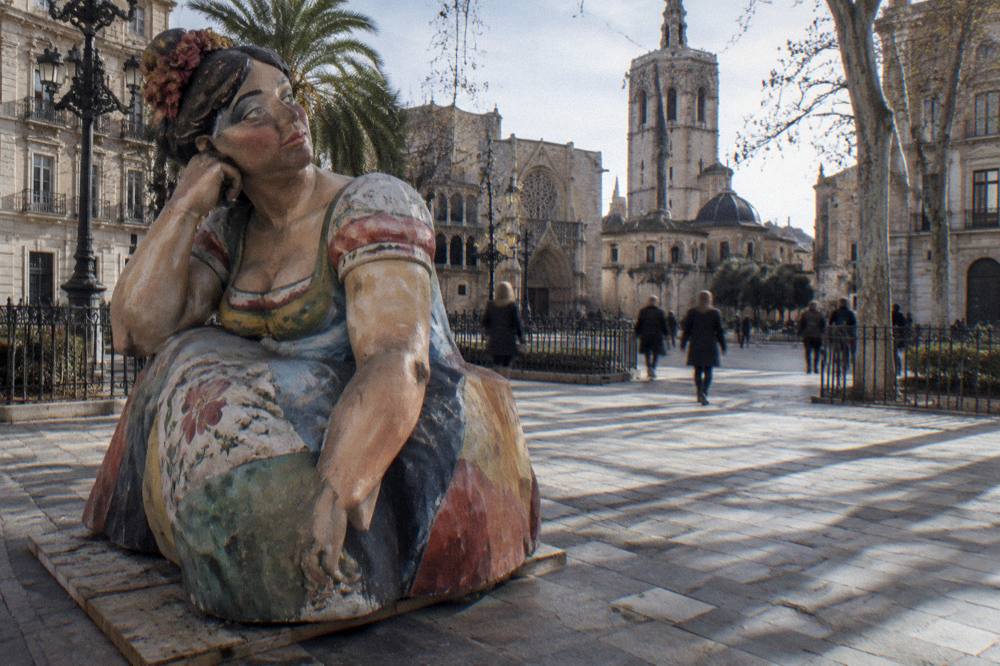
The best free strategy is to walk, and the old city is where the density is highest. The Valencia Old Town free walking tour in English with a local, a GuruWalk listing, meets at Plaça dels Furs, runs 2 hours 30 minutes, and is rated 4.99 out of 5 across 1,589 GuruWalk reviews. Its ground is the same Ciutat Vella street grid where many of the central fallas stand, so a walk taken before the plantà gives you the layout, and a return visit after it gives you the monuments.
For the same reason, Free Tour Valencia Essentials is worth a second mention here as a GuruWalk listing in its own right rather than only as an alternative: it meets at Plaça de la Mare de Déu, runs 2 hours 30 minutes in English and Spanish, and is rated 4.73 out of 5 across 5,030 GuruWalk reviews. The plaza it starts from is a short walk from the Plaza del Ayuntamiento mascleta site and from the Plaza de la Virgen where the Ofrenda arrives.
How Do Free Walking Tours Fit Into Fallas Week?
Free walking tours fit Fallas week easily, because the walks listed on this site are free, pay what you want, run by independent local guides, and concentrated in exactly the streets where the festival happens, so a walk slots between the 14:00 mascleta and the evening burns without conflicting with either. The 36 free walking tours on this site, 35 on GuruWalk and one on freetour.com, cover the old city, Ruzafa, El Cabanyal and the City Of Arts And Sciences, and none of them takes a booking fee. A visitor reserves a free spot and tips the guide what the walk was worth, which is the whole pricing model, and no tip figure is suggested here.
| Walk | Platform | Meets At | Duration | Rating And Reviews |
|---|---|---|---|---|
| Free Monumental Tour of Valencia | freetour.com | Lonja de la Seda | 1 hour 45 minutes | 9.4 out of 10 across 280 freetour.com reviews |
| Free Tour Valencia Essentials | GuruWalk | Plaça de la Mare de Déu | 2 hours 30 minutes | 4.73 out of 5 across 5,030 GuruWalk reviews |
| Valencia Old Town free walking tour in English with a local | GuruWalk | Plaça dels Furs | 2 hours 30 minutes | 4.99 out of 5 across 1,589 GuruWalk reviews |
| Complete Express Free Tour | GuruWalk | Pont de Serrans | 2 hours | 4.97 out of 5 across 860 GuruWalk reviews |
| Time Capsule: History Tour of Valencia | GuruWalk | Pont de Serrans | 2 hours | 4.83 out of 5 across 442 GuruWalk reviews |
Fallas week puts a few practical pressures on the old city: crowds, street closures around planted monuments and the noise of firecrackers going off all day. A walking tour that meets at a fixed landmark, such as the Lonja de la Seda or Torres de Serrans, gives you an anchor point in a city whose street layout is temporarily rearranged by barriers and monuments. The Complete Express Free Tour, a GuruWalk listing meeting at Pont de Serrans, runs 2 hours and is rated 4.97 out of 5 across 860 GuruWalk reviews, a compact option for a day already filled with the mascleta and an evening of burns. The city's own monument pages, including the official tourism body's Serranos listing, carry the municipal free-day rules that apply during the festival week too.
For the deeper background reading, the What Is Free To Watch At Las Fallas blog post takes the same question in shorter form, and Free Things To Do In Valencia keeps the full directory of free walks and free sights across the city. The festival's fixed pattern means the advice holds year after year: the street is the venue, the venue is free, and the two ticketed elements are extras rather than essentials.
Common Questions About Las Fallas In Valencia
Is Las Fallas Free To Watch?
Yes, nearly all of it. The mascleta, the street fallas monuments, the Ofrenda and the Cremà all happen in public space and cost nothing to watch. Only the Special Section monument enclosures from 16 to 19 March and the Ninot Exhibition are ticketed.
When Is The Mascleta In Valencia?
The mascleta fires daily at 14:00 sharp at Plaza del Ayuntamiento from 1 March, continuing through the festival to 19 March. It is free to watch from the square and surrounding streets.
What Is The Cremà And Does It Cost Anything?
The Cremà is the burning of the fallas monuments on the night of 19 March, staggered from the children's fallas to the final large burn. Watching from public space is free; only the Special Section enclosure burns require a ticket to view from inside the barrier.
Can You Walk Among The Fallas Statues For Free?
Yes. The street fallas stand in public space for the duration of the festival and can be walked among freely, district by district. The only monuments behind a ticketed barrier are the Special Section enclosures.
Are Free Walking Tours Running During Fallas Week?
The free walking tours listed on this site, 35 on GuruWalk and one on freetour.com, are free, pay what you want and run by independent local guides, and they cover the same central streets where the festival happens. A visitor reserves a free spot and tips the guide what the walk was worth.
Do Museums Change Their Prices During Fallas?
No. The standard regimes hold during the festival: municipal monuments such as the Lonja de la Seda are free on Sundays and public holidays from 10:00 to 14:00 and EUR 2 otherwise, while the Cathedral's cultural visit remains EUR 12 and the municipal Sunday rule never applies to it.